How to Organize Home Office Paperwork Before Tax Season
This page may contain affiliate links. Some links on this site may be affiliate links, and we may earn a commission from affiliate programs at no extra cost to you.
November is a good month to deal with the paper pile in a home office. The holidays bring receipts and gift-return slips, the year-end statements start arriving in January, and by February the W-2s, 1099s and mortgage interest forms land all at once. If your desk already has a stack of unopened mail on it, setting up a simple filing system now makes tax season in April far less stressful. This guide walks through a system that works for most households and side businesses, plus the gear that helps.
| Photo | Product | Best For | Key Spec | Price | Shop |
|---|---|---|---|---|---|
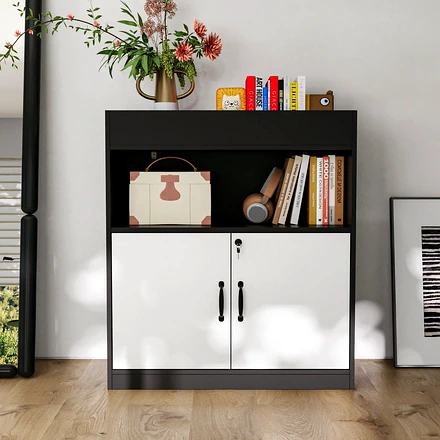 | FUFU&GAGA 31.5" Modern Locking Filing & Office Storage Cabinet | Best Overall | Locking swing-door security | ~$179 Fall Sale: Up to 51% Off | View Deal → |
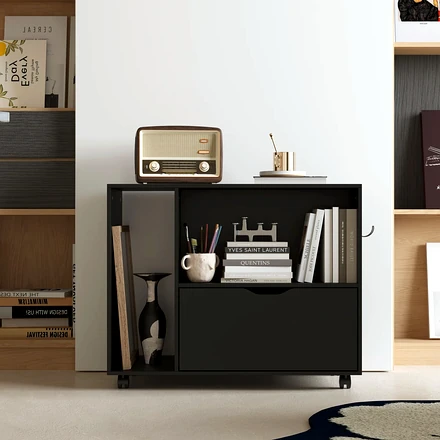 | FUFU&GAGA 31.5" Rolling Double File Cabinet with Side Hooks & Casters | Runner-Up Pick | 360° locking caster wheels | ~$120 Fall Sale: Up to 51% Off | View Deal → |
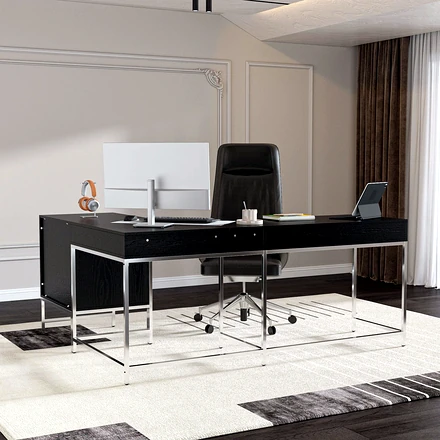 | FUFU&GAGA 70.8" L-Shaped Executive Computer Desk with File Drawer | Heavy-Duty Pick | 70.8-in corner executive layout | ~$509 Fall Sale: Up to 51% Off | View Deal → |
Use three places, not one big pile
Most paper problems come from having no single spot for incoming mail and no habit of clearing it. A three-zone setup fixes both.
The first zone is an inbox: one tray on or near your desk where every piece of incoming paper lands until you deal with it. The second is an active file, a small folder or desktop file box for things that need action in the next few weeks, such as bills to pay, forms to sign and insurance claims in progress. The third is the archive, a filing cabinet or drawer of labeled hanging folders for records you are keeping but no longer need to act on.
Set a recurring ten-minute slot each week to empty the inbox. Each sheet gets one of four outcomes: act on it, file it, scan it or shred it.
Folder categories that cover most households
Start with broad labels and split them only when a folder gets too thick. A practical set is taxes (one folder per year), banking and investments, insurance (home, auto, health and life), medical, house and property, vehicles, and income, which holds pay stubs or invoices if you have a side business. If you bought your first home recently, keep the closing disclosure, deed and title insurance policy together in their own folder; you will want them when you refinance or sell. Our first-home tool kit guide covers the other side of new homeownership.
How long to keep tax records
The IRS says to keep records that support a tax return for at least three years from the date you filed, and longer in some situations: seven years if you claimed a loss from worthless securities or a bad debt deduction, and at least four years for employment tax records if you have employees. Records connected to property, such as home improvement receipts, are worth keeping until a few years after you sell, because they can affect your gain. Wisconsin's state return generally follows the same filing calendar as the federal one. When in doubt, check the IRS page on how long to keep records or ask your tax preparer, and keep the returns themselves permanently if you have the space.
If you work from home for your own business, the home office deduction has its own record-keeping rules, including measurements of the space and utility bills. IRS Publication 587 explains who qualifies; under current federal rules most W-2 employees cannot claim it.
Scan what you can, shred what you do not need
A sheet-fed document scanner turns a box of statements into searchable PDFs in an afternoon. Look for automatic duplex scanning (both sides in one pass), an automatic document feeder that holds a stack of pages, and software that names files and runs text recognition. Back up the scans in two places, such as an external drive and a cloud service with two-factor sign-in turned on.
Anything with an account number, Social Security number or signature should be shredded rather than tossed in the recycling. Shredders are often rated on the DIN 66399 security scale. Strip-cut models (P-2) slice paper into long ribbons, cross-cut models (P-3 or P-4) cut it into small pieces and are a common recommendation for home use, and micro-cut models (P-5 and up) produce confetti-sized bits. Also check the sheet capacity, the bin size and the run time before the motor needs to cool down.
Protect the papers you cannot replace
Birth certificates, passports, Social Security cards, vehicle titles and estate documents belong in a fire-resistant safe or box, or a bank safe deposit box. A UL Class 350 fire rating means the interior was kept below 350 degrees Fahrenheit for the rated time, which protects paper. Flash drives and backup disks need a lower Class 125 rating, so check the label if you store media in the same box. Water resistance is worth having if your office is in a basement.
Picks worth a closer look
Cross-cut or micro-cut paper shredder
A home shredder rated P-4 or higher on the DIN 66399 scale, with enough sheet capacity and bin size for a year-end purge. Many models also accept credit cards and staples.
Fire-resistant document safe
A safe or lockable box with a UL Class 350 fire rating and, ideally, water resistance, sized for letter paper laid flat.
Sheet-fed document scanner
A compact scanner with an automatic document feeder, duplex scanning and searchable PDF output, for going paperless on old statements and receipts.
Label maker
A handheld label maker for clean, readable folder tabs and box labels that will still be legible in five years.
Hanging file folders and a desktop file box
Letter-size hanging folders with tabs plus a small open file box for the active file on your desk.
Where to buy
If your archive has outgrown a desk drawer, a dedicated filing cabinet or a desk with a hanging-file drawer keeps it close at hand. These are specific products from retailers we partner with. We have not tested them; check the dimensions, drawer type and current price on the retailer's page before buying.
FUFU&GAGA 31.5" Modern Locking Filing & Office Storage Cabinet
Locking home office filing cabinet with swing doors and adjustable shelving for documents and office supplies.
- Locking swing-door security
- 31.5-in wide countertop surface
- Heavy flat-pack cartons; two-person assembly recommended
FUFU&GAGA 31.5" Rolling Double File Cabinet with Side Hooks & Casters
Mobile under-desk or beside-desk double filing cabinet on smooth 360-degree caster wheels.
- 360° locking caster wheels
- Double-wide file & supply drawers
- Heavy flat-pack cartons; two-person assembly recommended
FUFU&GAGA 70.8" L-Shaped Executive Computer Desk with File Drawer
Corner executive desk featuring four utility drawers, one deep hanging-file drawer, and open bookshelf storage.
- 70.8-in corner executive layout
- Deep hanging-file drawer
- Heavy flat-pack cartons; two-person assembly recommended
The bottom line
Pick one inbox tray, one small active file and one labeled archive, and spend ten minutes a week keeping them clear. Scan what you can, shred anything with account numbers, and keep irreplaceable documents in a fire-rated safe. Do it before the January statements arrive and tax season becomes a matter of pulling one folder. If you are also rearranging your desk, our standing desk guide and ergonomic chair guide can help you set up the rest of the space.
Frequently asked questions
How long should I keep tax records?
The IRS generally says to keep records supporting a return for at least three years after filing, seven years if you claimed a loss from worthless securities or a bad debt deduction, and at least four years for employment tax records.
What shredder security level is good for home use?
Cross-cut shredders rated P-3 or P-4 on the DIN 66399 scale are a common choice for household documents; micro-cut models rated P-5 and up cut paper even smaller.
What fire rating should a document safe have?
A UL Class 350 rating keeps the interior below 350 degrees Fahrenheit for the rated time, which is meant to protect paper. Digital media such as flash drives needs a Class 125 rating.